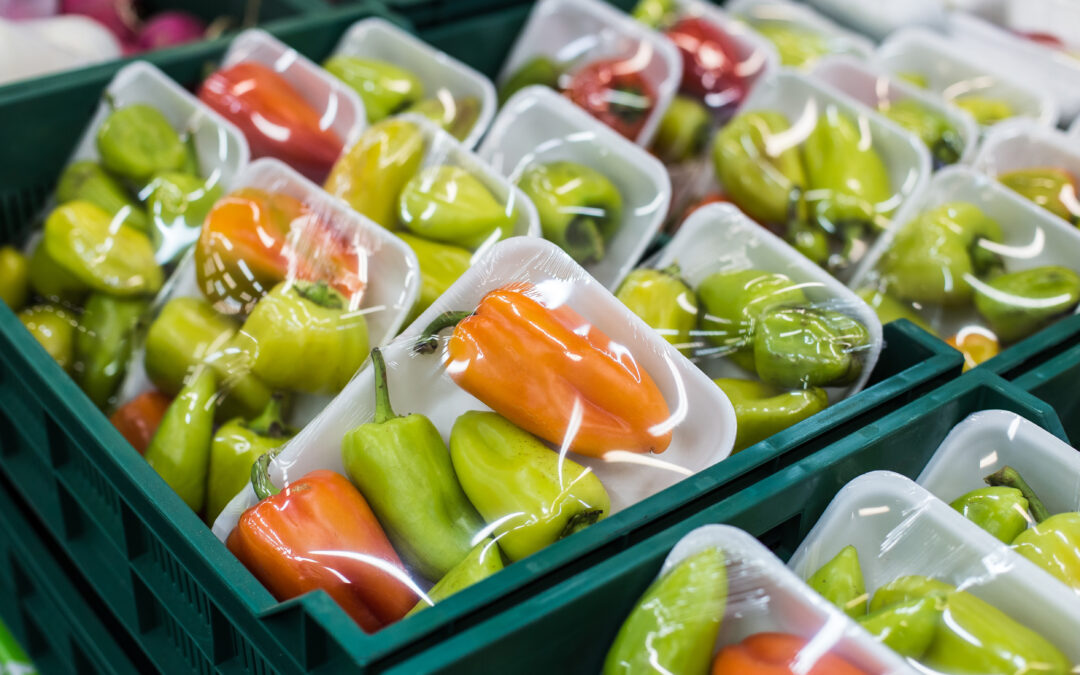
Polyethylene is a lightweight, durable plastic polymer used to create flexible and rigid packaging for food and consumer goods.
Discovered in the 1930s, polyethylene is now the most widely used plastic in the world due to its adaptability.
Polyethylene flexible packaging for food comes in these forms:
Polyethylene can be engineered to be clear or opaque, thin or thick, soft or highly durable, making it suitable for a wide range of food products—from delicate produce to heavy or frozen items.
What Is Polyethylene Used for in Food Packaging?
Polyethylene flexible packaging for food is used for protection from contamination, moisture, oxygen, or to prevent handling damage. Its flexibility allows manufacturers to tailor packaging to specific food safety, shelf-life, and logistics requirements.
Common food packaging applications include:
- Fresh produce bags
- Bakery and bread bags
- Meat and poultry overwrap
- Frozen food packaging
- Dry goods and bulk ingredient bags
- Beverage multipacks and secondary packaging
Is Polyethylene Food Safe?
Yes—polyethylene is considered food safe when manufactured and handled under proper food safety standards.
Polyethylene flexible packaging for food is:
- Non-toxic
- Chemically stable
- Non-reactive with food
- Resistant to moisture and contaminants
What Are A-Pac’s Food Safety Standards for Polyethylene?
A-Pac is FSSC 22000 certified by Intertek, meaning our polyethylene packaging is produced under a globally recognized food safety management system aligned with Global Food Safety Initiative (GFSI) standards.
FSSC 22000 is one of the most important certifications a poly bag manufacturer can hold for food packaging. It is built on internationally recognized standards, including ISO 22000, combined with sector-specific prerequisite programs and additional scheme requirements.
As an FSSC 22000 certified manufacturer, A-Pac demonstrates a long-standing commitment to producing food-safe poly bags and polyethylene films that meet today’s regulatory expectations and customer requirements.
What Are the Benefits of Polyethylene Food Packaging?
Polyethylene flexible packaging for food is a top choice for its unmatched balance of performance and cost.
#1. Non-Toxic and Food Safe
Polyethylene does not interact with food products or leach harmful substances under normal use conditions. This makes it suitable for direct contact with a wide range of foods, including fresh produce, baked goods, frozen items, and dry ingredients.
When polyethylene packaging is produced by an FSSC 22000 certified manufacturer, you gain additional assurance that the material is handled, processed, and manufactured under a verified food safety management system.
#2. Highly Versatile and Customizable
Polyethylene’s adaptability is one of its greatest strengths. It can be manufactured into bags, films, tubing, sheets, and liners in a wide range of sizes, thicknesses, and configurations.
This versatility allows food manufacturers to:
- Match packaging precisely to product size and weight
- Choose clarity or opacity based on product visibility needs
- Adjust film thickness for protection without excess material
Because polyethylene flexible packaging for food can be easily customized, it supports everything from small specialty food brands to high-volume commercial operations.
#3. Cost-Effective for Food Packaging Operations
Polyethylene is widely available and efficient to produce, making it one of the most cost-effective food packaging materials on the market.
Its affordability helps manufacturers:
- Control packaging costs at scale
- Reduce waste through right-sized packaging
- Maintain margins without sacrificing performance or safety
For businesses balancing food safety requirements with budget constraints, polyethylene offers an optimal combination of performance and value.
#4. Lightweight for Efficient Shipping and Handling
Polyethylene packaging is extremely lightweight, which provides important logistical advantages.
Lighter packaging:
- Reduces overall shipping weight and freight costs
- Improves handling efficiency throughout distribution
- Helps food manufacturers stay within shipping and pallet weight limits
These weight savings can add up quickly, especially for food and beverage products shipped in high volumes.
#5. Enhanced Protection and Shelf-Life Support
Polyethylene provides an effective barrier against moisture and, in many applications, oxygen exposure—two key factors that can negatively affect food quality.
This protective performance helps preserve freshness and texture, reduce spoilage caused by humidity, and extend shelf life for many food products.
By supporting product stability, polyethylene packaging plays a direct role in maintaining food quality and reducing waste.
#6. Durable and Resistant to Handling Damage
Despite being lightweight, polyethylene is a strong and resilient material. It resists tearing, punctures, and abrasion during normal handling, storage, and transportation.
This durability helps:
- Protect food products from contamination and damage
- Reduce packaging failures and product loss
- Maintain package integrity from production to point of sale
Different formulations, such as LDPE and LLDPE, allow manufacturers to fine-tune strength and flexibility based on application needs.
What Are the Types of Polyethylene Food Packaging?
The two most commonly used types of polyethylene flexible packaging for food are:
- Low-Density Polyethylene (LDPE)
- Linear Low-Density Polyethylene (LLDPE)
They differ in strength, stretch, clarity, and resistance to punctures, which makes each better suited for certain food packaging applications.
Both materials are widely used for food packaging because they are durable, flexible, and suitable for direct food contact when manufactured under appropriate standards.
LLDPE vs. LDPE Comparison: What’s the Difference?
A-Pac uses both LLDPE and LDPE to create food-safe packaging tailored to your specific application.
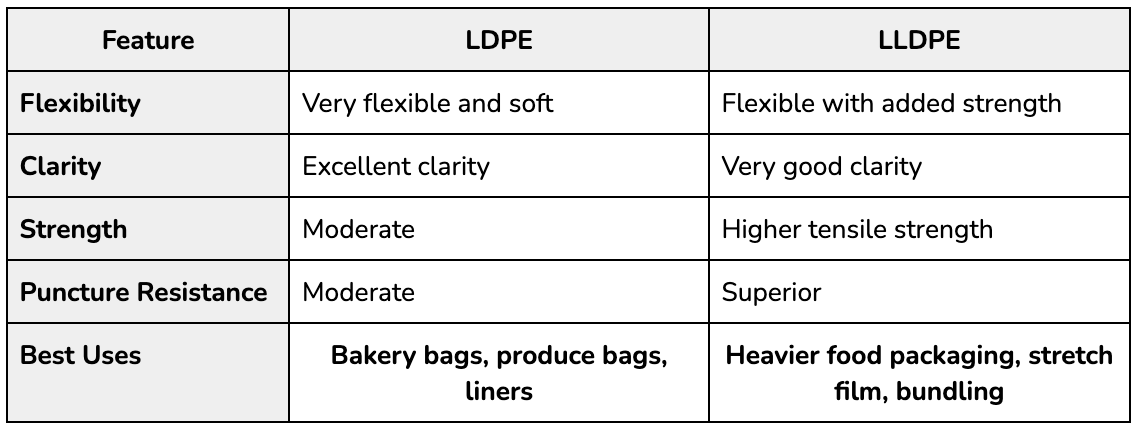
In practice:
- LLDPE excels in applications requiring strength, stretch, and puncture resistance.
- LDPE is ideal for lightweight food packaging where softness and clarity matter.
Modern Applications of LLDPE & LDPE in Food Packaging
Polyethylene Tubing & Packaging Bags
Polyethylene tubing and bags typically range from 0.75 mil to 6 mil in thickness, allowing precise customization.
- Thinner films → Ideal for fruits, vegetables, and bakery items
- Thicker films → Suitable for frozen foods or heavier products
Tubing can be cut and sealed to exact lengths, reducing waste and improving efficiency.
Stretch Film for Food Packaging
LLDPE stretch film is widely used for:
- Bundling products
- Securing canned goods
- Stabilizing palletized food products
Its high stretch rate, clarity, and low shrinkage temperature make it ideal for secondary food packaging.
Which Food-Safe Polyethylene Products Are Available?
A-Pac manufactures a wide range of polyethylene packaging solutions, including:
- Flat poly bags
- Wicketed poly bags
- Gusseted poly bags
- Poly bags on rolls
- Side-weld poly bags
- Bottom-seal poly bags
- Staple-pack poly bags
- Custom-printed poly bags
All products can be customized by size, thickness, clarity, and branding, with no minimum order requirements.
Is Polyethylene Food Packaging Sustainable?
Yes—polyethylene continues to evolve to meet modern environmental expectations while maintaining food safety and performance.
One of polyethylene’s key sustainability advantages is its recyclability. Many polyethylene films and bags can be collected and recycled into new products. This recyclability supports a more circular approach to packaging by extending the useful life of plastic materials and reducing the demand for virgin resin.
Compared to some alternative packaging materials, polyethylene is relatively energy-efficient to produce. Its manufacturing process typically requires less energy and results in lower greenhouse gas emissions than heavier or more complex packaging materials.
The polyethylene industry continues to invest in innovation, including:
- Improved recyclable film structures
- Increased use of post-consumer recycled (PCR) content where appropriate
- Development of bio-based polyethylene derived from renewable resources
Partner With a Trusted Polyethylene Food Packaging Manufacturer
One of the reasons polyethylene remains a leading food packaging material is its ability to be precisely matched to specific applications. Choosing the right manufacturing partner is just as important as choosing the right material.
A-Pac’s FSSC 22000 food safety certification, combined with decades of manufacturing experience, supports consistent quality across food-contact applications. We work with customers across a wide range of industries, supplying polyethylene packaging for:
- Perishable and fresh foods
- Dry goods and ingredients
- Food and beverage secondary packaging
- Industrial and non-food applications
With the ability to customize size, thickness, and format—and without minimum order requirements—A-Pac supports both established food manufacturers and growing brands that need dependable, food-safe packaging solutions.
To learn more about available polyethylene packaging options or to discuss a specific application, get in touch with the A-Pac Manufacturing team or request a quote.
