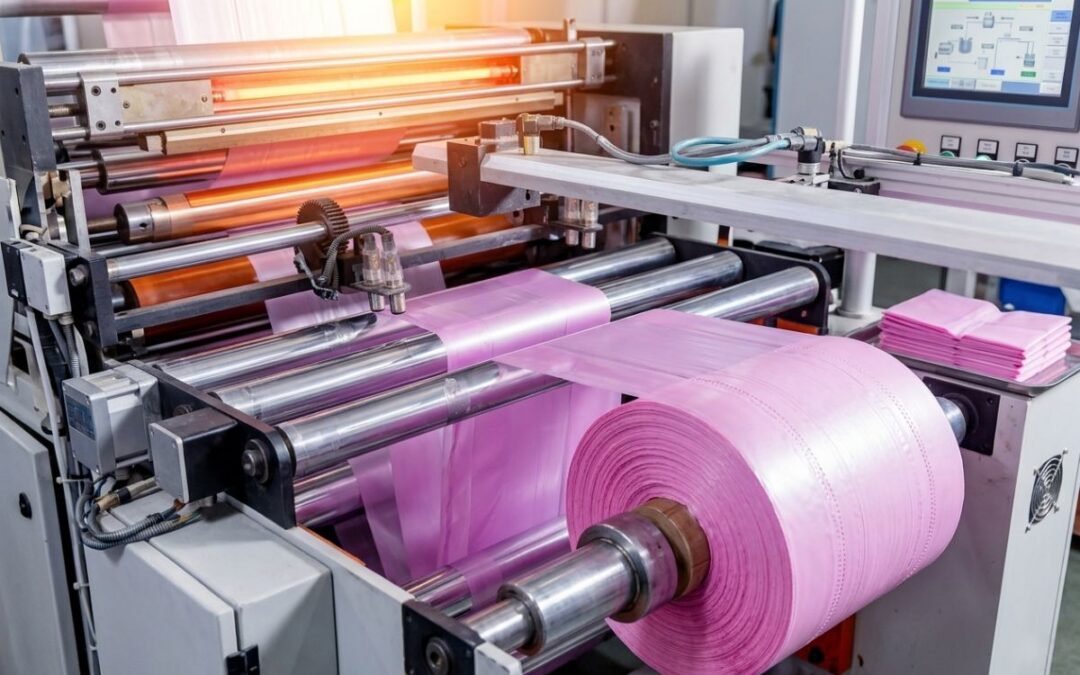
Polyethylene is one of the most widely used materials in modern packaging. From industrial liners to food packaging, polyethylene plays a critical role in protecting products and keeping operations efficient.
But how does polyethylene manufacturing actually work?
In this guide, we’ll walk through the full polyethylene production process—from raw materials to finished poly bags—and explore how these materials are used and recycled in today’s packaging ecosystem.
What Is Polyethylene?
Polyethylene is a thermoplastic polymer made from petroleum or natural gas. It is widely used in flexible packaging, including films and poly bags, due to its strength, flexibility, and moisture resistance.
Key characteristics of polyethylene:
- Lightweight yet strong
- Resistant to moisture and chemicals
- Easily customizable for different applications
- Recyclable and efficient to produce
Common Types of Polyethylene:
Different types of polyethylene are engineered for specific performance needs:
- LDPE (Low-Density Polyethylene): Flexible with excellent clarity
- LLDPE (Linear Low-Density Polyethylene): Stronger with improved puncture resistance
- HDPE (High-Density Polyethylene): Rigid with superior moisture resistance
Polyethylene Production Process: How Polyethylene Is Made
Understanding how polyethylene is made starts at the molecular level. The polyethylene production process transforms raw hydrocarbons into a versatile plastic resin used in packaging.
Quick Answer:
Polyethylene is made by polymerizing ethylene gas into long molecular chains, which are then processed into usable plastic material.
Step 1: Raw Material Extraction
Polyethylene production begins with natural gas or crude oil. Ethane is extracted and processed through a “cracking” method to produce ethylene gas.
Step 2: Polymerization
Ethylene molecules are chemically bonded together to form long polymer chains. This process determines the structure and performance of the final material. Different catalysts and conditions produce LDPE, LLDPE, or HDPE.
Step 3: Resin Pellet Production
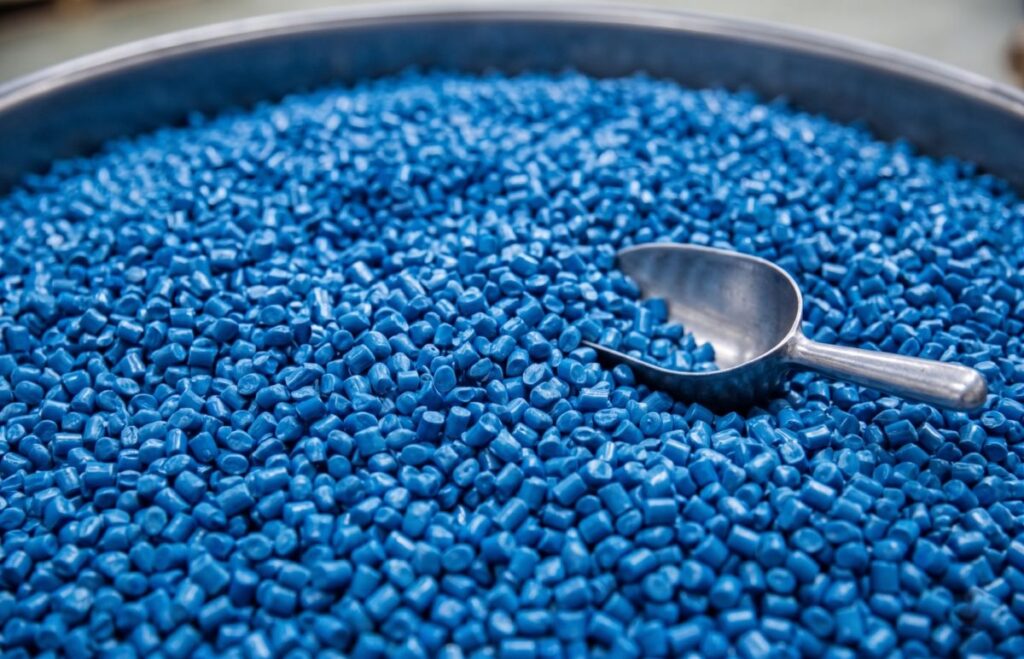
The molten polyethylene is cooled and cut into small pellets. These resin pellets are the raw material used in downstream manufacturing processes.
From Resin to Film: The Polyethylene Manufacturing Process
Once resin pellets are produced, they are transformed into film—the foundation of poly bags and flexible packaging.
Step 4: Film Extrusion
Pellets are melted and extruded into thin plastic film. Two primary methods are used:
- Blown film extrusion: Creates stronger, more durable films
- Cast film extrusion: Produces clearer, more uniform films
Film thickness (measured in mil) and performance characteristics are controlled during this stage.
Step 5: Additives and Customization
Manufacturers can enhance film performance by adding:
- UV inhibitors
- Anti-static agents
- Colorants
The resin blend and additives directly impact strength, clarity, and even downgauging opportunities, allowing thinner films to maintain performance while reducing material costs.
Step 6: Cooling and Winding
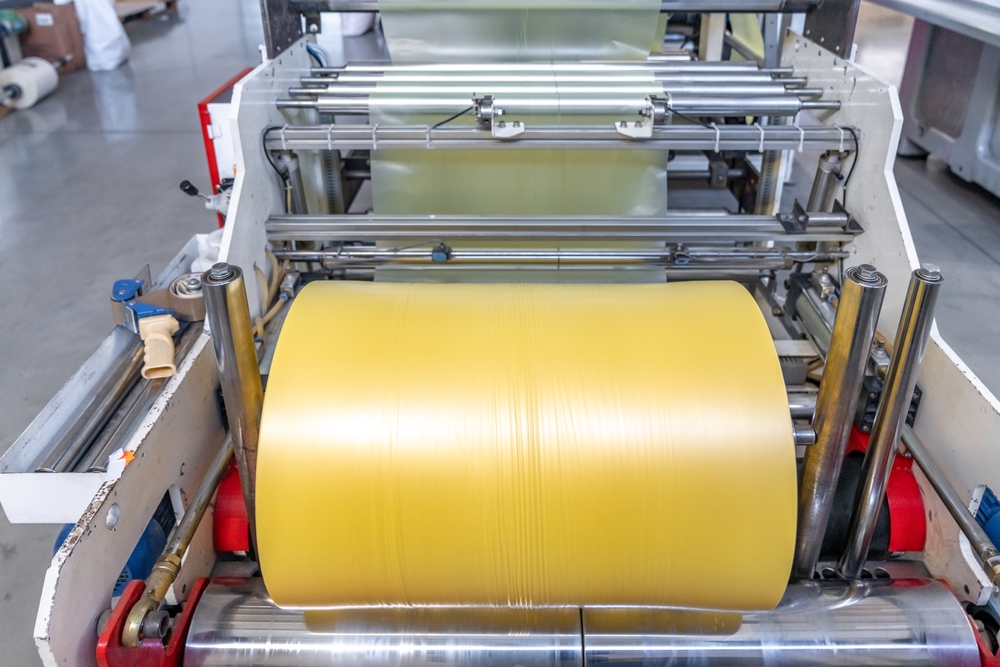
The film is cooled, flattened, and wound into large rolls, ready for the next phase: converting.
How Poly Bags Are Made
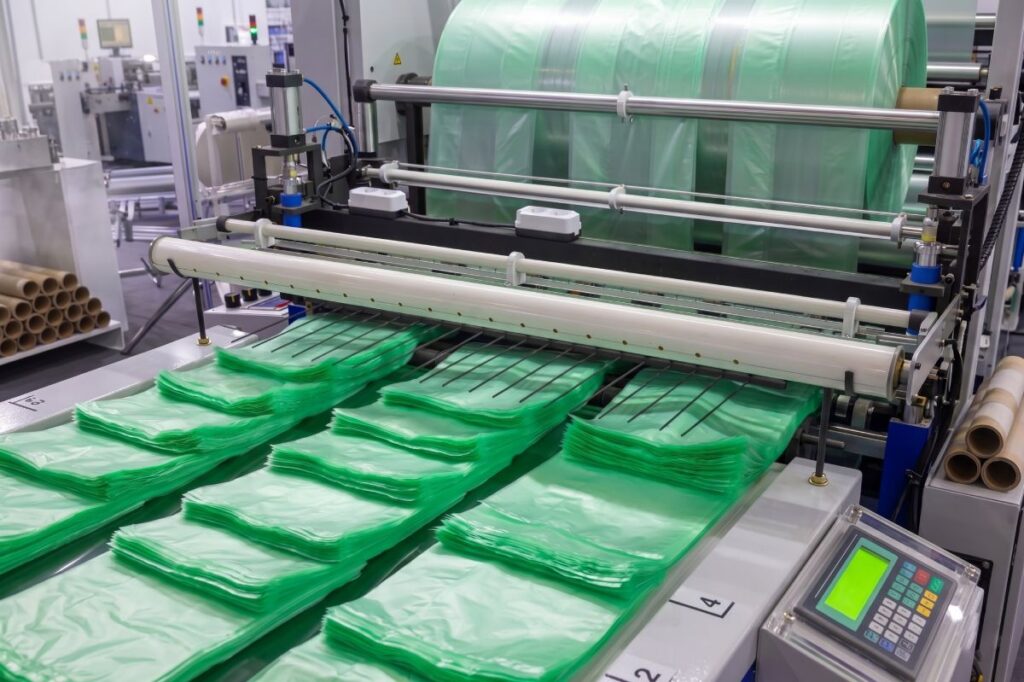
Converting transforms polyethylene film into finished packaging products.
Step 7: Converting Film into Bags
Film rolls are cut, sealed, and shaped into various bag styles, including:
- Flat bags
- Gusseted bags
- Wicketed bags
Step 8: Printing and Branding
Flexographic printing allows for custom branding, labeling, and product information directly on the bag.
Step 9: Quality Control
Finished bags undergo rigorous testing to ensure:
- Seal integrity
- Strength and durability
- Consistency across production runs
This is especially critical for industrial and high-performance applications.
How Polyethylene Properties Impact Bag Performance
Not all poly bags perform the same, and it often comes down to material selection.
Polyethylene properties such as strength, flexibility, and barrier protection directly influence performance. Resin blends play a major role in:
- Durability: Resistance to punctures and tears
- Cost efficiency: Optimizing material usage
- Downgauging: Using less material without sacrificing strength
Choosing the right polyethylene formulation ensures the bag performs as required while controlling costs.
Applications of Polyethylene Bags Across Industries
Polyethylene bags are used across a wide range of industries due to their versatility:
- Industrial packaging: Protecting parts, equipment, and materials
- Food & beverage: Safe, moisture-resistant packaging
- Retail and distribution: Shipping and storage solutions
- Medical and specialty: Clean, protective environments
The Recycling Process: How Polyethylene Is Reused
Polyethylene is not only efficient to produce. It’s also recyclable, making it a sustainable packaging option when properly managed.
Quick Answer:
Polyethylene is recycled by collecting, cleaning, shredding, and reprocessing it into new resin pellets for future manufacturing.
Step 10: Collection and Sorting
Used polyethylene materials are collected and sorted into:
- Post-industrial (manufacturing scrap)
- Post-consumer (used products)
Step 11: Cleaning and Reprocessing
Materials are washed, shredded, and melted down into reusable plastic.
Step 12: Manufacturing Recycled Products
The material is reprocessed into new resin pellets, which can be used to create new bags, films, or other plastic products.
Why Polyethylene Remains a Leading Packaging Material
Despite evolving materials and sustainability demands, polyethylene continues to lead the packaging industry because it offers:
- Lightweight, cost-effective performance
- Strong protection for a wide range of products
- High customization for specific applications
- Recyclability and manufacturing efficiency
Choosing the Right Polyethylene Bag for Your Application
Selecting the right poly bag involves more than just size. Key considerations include:
- Film thickness (mil)
- Resin type (LDPE, LLDPE, HDPE)
- Additives and performance requirements
- Bag style and design
Working with an experienced manufacturer ensures you get the right balance of performance, cost, and efficiency.
Partner with A-Pac for High-Performance Polyethylene Packaging
At A-Pac Manufacturing, polyethylene manufacturing isn’t just about producing bags—it’s about engineering packaging solutions that perform.
With expertise in resin selection, film extrusion, and custom converting, A-Pac helps businesses:
- Optimize material usage and reduce costs
- Improve packaging performance
- Customize solutions for specific applications
Ready to improve your packaging performance?
Request a quote or speak with an A-Pac expert today to find the right polyethylene solution for your needs.