Not all poly bags are created equal.
While standard polyethylene bags are suitable for many packaging applications, some products require specialized protection against static electricity, UV exposure, corrosion, contamination, or the demands of high-speed packaging lines. Choosing the right packaging isn’t simply about containing a product—it’s about protecting product quality, improving operational efficiency, and minimizing unnecessary costs throughout the supply chain.
Whether you’re packaging electronic components, precision-machined parts, food products, or industrial materials, selecting the appropriate specialty poly bag can reduce damage, improve productivity, and extend product life.
In this guide, you’ll learn:
- What specialty poly bags are
- How anti-static, UV-resistant, VCI, gusseted, and wicketed bags work
- Which industries commonly use each type
- How to determine which specialty features your application requires
What Are Specialty Poly Bags?
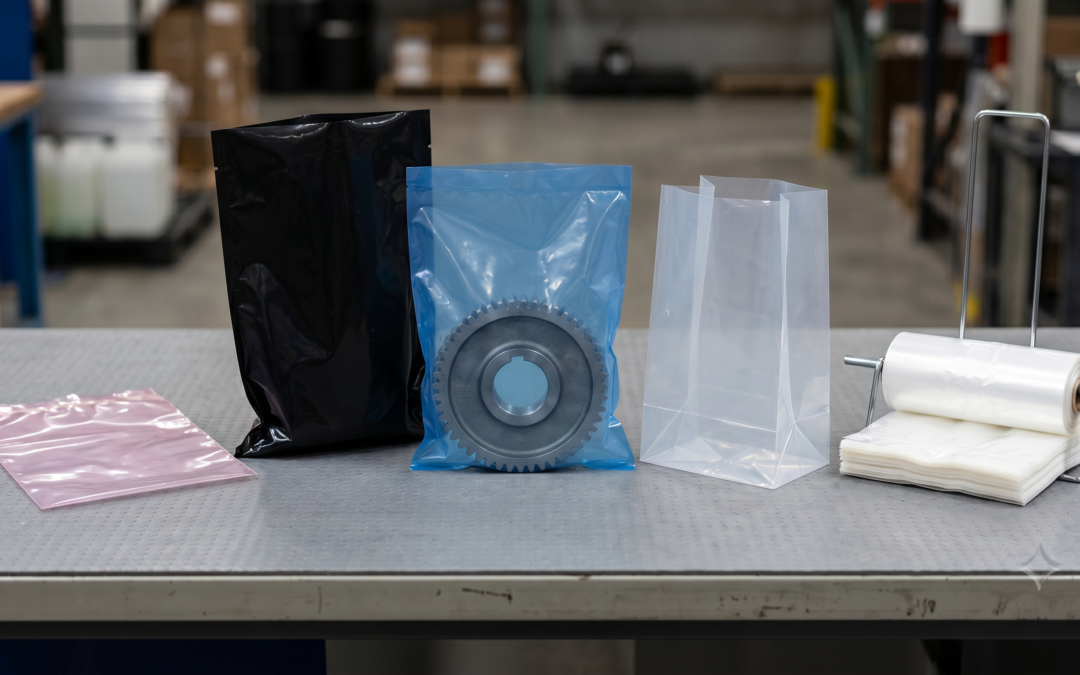
Specialty poly bags are polyethylene bags engineered with materials, additives, or design features that provide protection or functionality beyond standard packaging. Common types include anti-static poly bags for electronics, UV-resistant bags for outdoor storage, VCI bags for corrosion protection, gusseted bags for bulky products, and wicketed bags for high-speed packaging operations.
Unlike stock packaging, specialty bags are designed around the unique requirements of the product being protected. Material selection, resin blends, bag construction, additives, and gauge all work together to improve packaging performance under specific operating conditions.
Quick Guide: Which Specialty Poly Bag Do You Need? |
||
|---|---|---|
| If you need to… | Choose… | Why |
| Protect electronics | Anti-static poly bags | Dissipates static charges that can damage components |
| Prevent rust | VCI poly bags | Creates a corrosion-inhibiting environment |
| Store products outdoors | UV-resistant poly bags | Resists degradation from prolonged sunlight exposure |
| Package bulky products | Gusseted poly bags | Expands to fit oversized or irregular items |
| Improve packaging speed | Wicketed poly bags | Designed for automated and semi-automated packaging lines |
Why Specialty Poly Bags Matter
Standard poly bags provide excellent protection for many products, but they aren’t engineered to solve every packaging challenge. Depending on your application, environmental conditions, or production process, additional performance features may be necessary to maintain product quality from manufacturing through final delivery.
Using packaging that’s specifically designed for your application can help reduce waste, improve packaging efficiency, and lower the total cost of ownership by preventing product damage before it occurs.
Key Challenges Standard Poly Bags May Not Solve:
- Electrostatic discharge damage
- UV degradation from sunlight
- Corrosion during storage and shipping
- Irregularly shaped products
- High-speed packaging line requirements
- Industry-specific compliance needs
Buyer Takeaway: Selecting the right specialty poly bag isn’t just about protecting products. It’s about improving manufacturing efficiency, reducing product loss, and optimizing packaging costs.
Anti-Static Poly Bags for Electronics and Sensitive Components
Electronic components are among the most sensitive products manufacturers handle. A static discharge that isn’t even noticeable to a person can permanently damage circuit boards, semiconductors, sensors, and other precision electronics.
That’s why many electronics manufacturers rely on anti-static poly bags as part of their packaging process.
What Are Anti-Static Poly Bags?
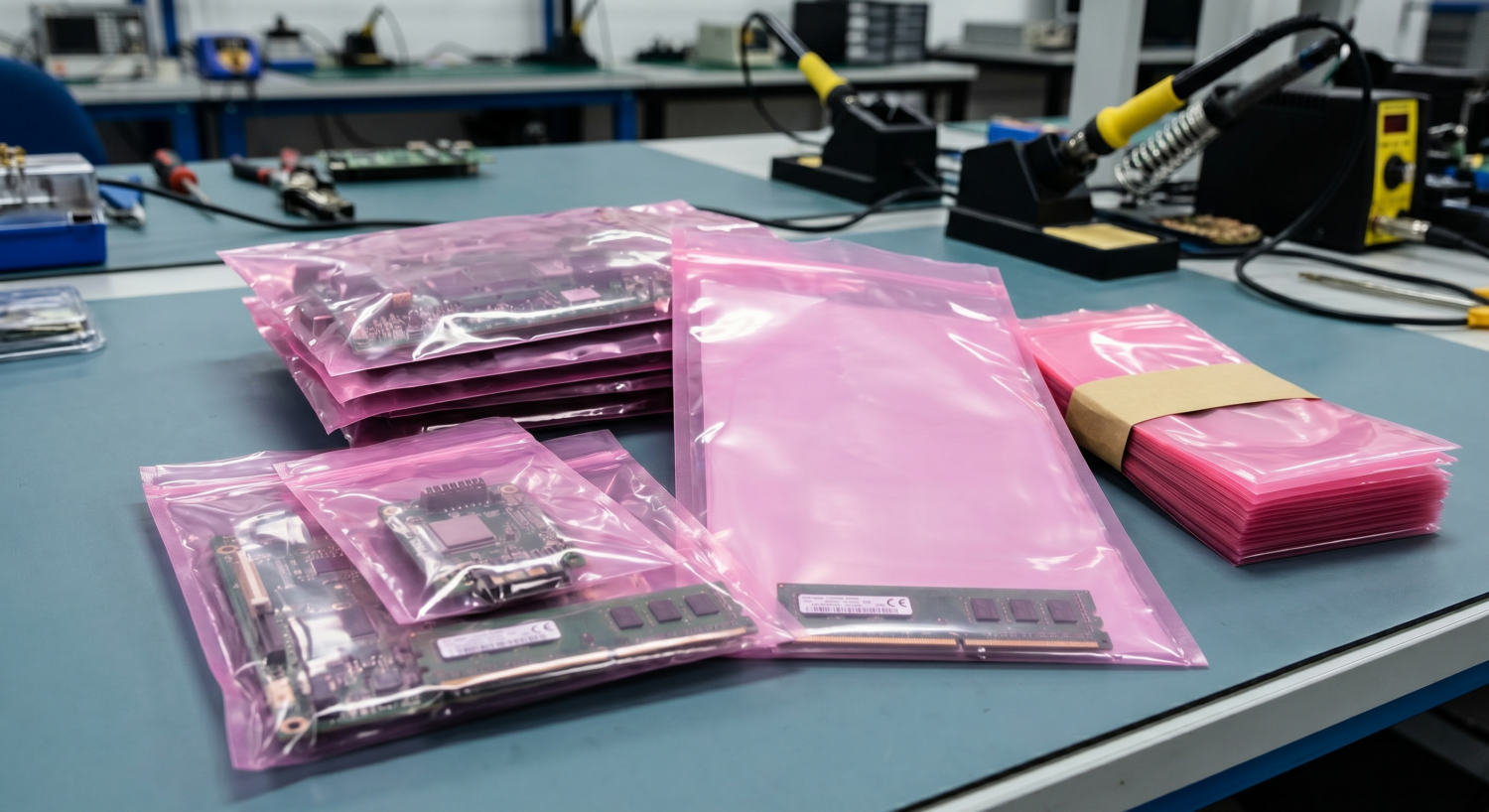
Anti-static poly bags are specially engineered to dissipate static electricity before it can accumulate and discharge into sensitive products.
Unlike standard polyethylene bags, these bags contain anti-static additives that reduce surface resistance and minimize the buildup of static charge during manufacturing, storage, and transportation.
Many anti-static bags are recognizable by their translucent pink appearance, although other ESD-safe constructions are available depending on the level of protection required.
How They Work:
Rather than allowing static electricity to build on the bag’s surface, anti-static materials safely dissipate electrical charges into the surrounding environment. This significantly reduces the risk of electrostatic discharge (ESD) damaging sensitive electronic components.
Benefits of Anti-Static Poly Bags:
- Protect sensitive electronics from ESD damage
- Reduce product failures and warranty claims
- Improve handling safety
- Support quality control throughout shipping and storage
- Help maintain product reliability
Common Applications:
- Printed circuit boards
- Electronic components
- Semiconductor products
- Medical electronics
- Telecommunications equipment
- Computer hardware
When Should You Use Anti-Static Poly Bags?
Use anti-static poly bags whenever products contain electronic components that could be damaged by electrostatic discharge during handling, storage, or transportation.
When Standard Poly Bags May Be Enough:
If your products don’t contain sensitive electronic components or static-sensitive materials, a standard polyethylene bag may provide all the protection you need without the added cost of anti-static additives.
UV-Resistant Poly Bags for Outdoor Storage
Many manufacturers store products outdoors before shipment or installation. While polyethylene is highly durable, prolonged exposure to ultraviolet (UV) light eventually causes most plastics to weaken, discolor, and become brittle.
UV-resistant poly bags are specifically designed to withstand these environments.

How UV-Resistant Poly Bags Work:
During manufacturing, UV inhibitors are blended directly into the polyethylene resin. These additives slow the breakdown caused by sunlight, allowing the packaging to maintain its strength and flexibility much longer than standard poly bags.
Rather than protecting only the product inside, UV-resistant bags also protect the integrity of the packaging itself.
Benefits:
- Improved outdoor durability
- Reduced cracking and brittleness
- Longer packaging lifespan
- Better product protection during long-term storage
- Lower replacement costs
Common Applications:
- Construction materials
- Agricultural products
- Landscaping supplies
- Outdoor equipment
- Industrial components stored outdoors
When UV Protection Isn’t Necessary:
If products are packaged, stored, and shipped entirely indoors, UV-resistant additives may not provide additional value. Understanding the storage environment helps determine whether these specialty materials are necessary.
VCI Poly Bags for Corrosion Protection
Rust is one of the most common (and costly) causes of product damage for metal components during storage and transportation. Even humidity trapped inside a sealed package can initiate corrosion over time.
VCI poly bags offer an effective solution without the need for messy oils or protective coatings.
What Are VCI Bags?
VCI stands for Vapor Corrosion Inhibitor.
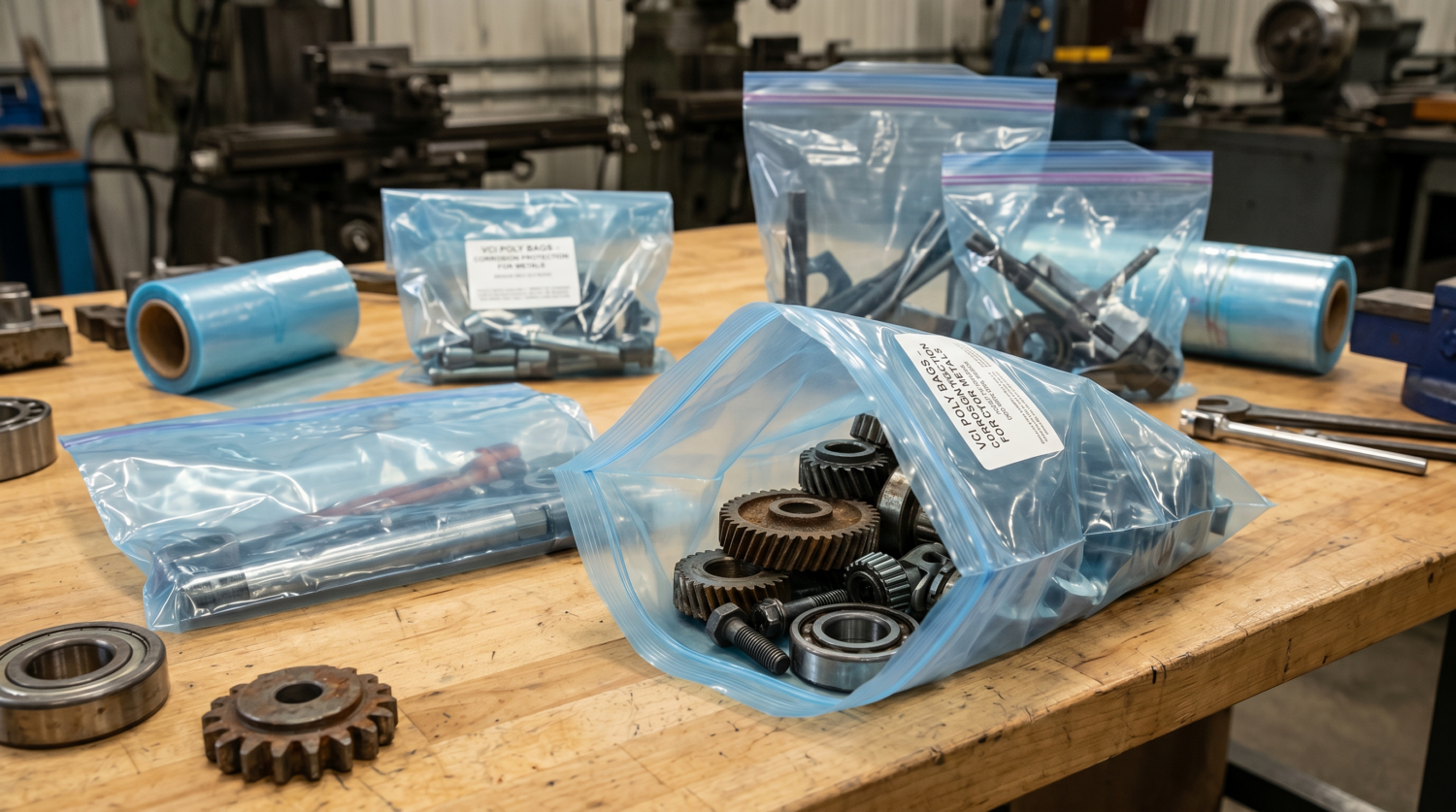
These specialty poly bags contain corrosion-inhibiting compounds that slowly release protective vapor molecules after the package is sealed.
The vapor circulates throughout the enclosed package and forms an invisible molecular barrier on exposed metal surfaces, interrupting the electrochemical process that causes oxidation and rust.
Unlike oils or greases, the protective layer is clean, dry, and typically requires no additional cleaning before the product is used or assembled.
Benefits:
- Helps prevent rust and corrosion
- Reduces or eliminates protective oils
- Simplifies packaging operations
- Protects products during shipping and storage
- Minimizes product rework caused by corrosion
Common Applications:
- Automotive components
- Aerospace parts
- Machine components
- Industrial equipment
- Metal fabrications
- Replacement parts
How Do VCI Bags Prevent Rust?
VCI bags release corrosion-inhibiting vapor molecules that create an invisible protective layer on exposed metal surfaces. This barrier reduces oxidation, helping prevent rust during storage and transportation.
When VCI Bags May Not Be Necessary:
Products made from plastics, composites, or other non-metallic materials typically don’t require VCI protection. Likewise, metal parts that will be packaged and used immediately may not need long-term corrosion protection, depending on storage conditions.
Can Specialty Poly Bags Combine Multiple Features?
Absolutely.
Many manufacturers require packaging that addresses multiple challenges simultaneously. Rather than choosing between specialty features, custom-engineered poly bags can combine multiple performance characteristics into a single packaging solution.
For example:
- FDA-compliant wicketed bags for automated food packaging lines
- UV-resistant gusseted bags for bulky products stored outdoors
- VCI bags with custom printing for industrial replacement parts
- Anti-static bags in custom sizes and gauges for sensitive electronics
Working with a custom packaging manufacturer allows you to tailor material selection, resin blends, bag construction, additives, and printing to your specific application rather than settling for a standard stock product.
At A-Pac Manufacturing, we help customers identify the right combination of performance features to improve protection, increase production efficiency, and reduce unnecessary packaging costs.
Gusseted Poly Bags for Larger or Irregular Products
Not every product fits neatly into a flat poly bag. Bulky items, boxed products, liners, and irregularly shaped components often require additional space without sacrificing product protection or using excessive packaging material.
Gusseted poly bags are designed to provide that flexibility.
What Is a Gusseted Poly Bag?
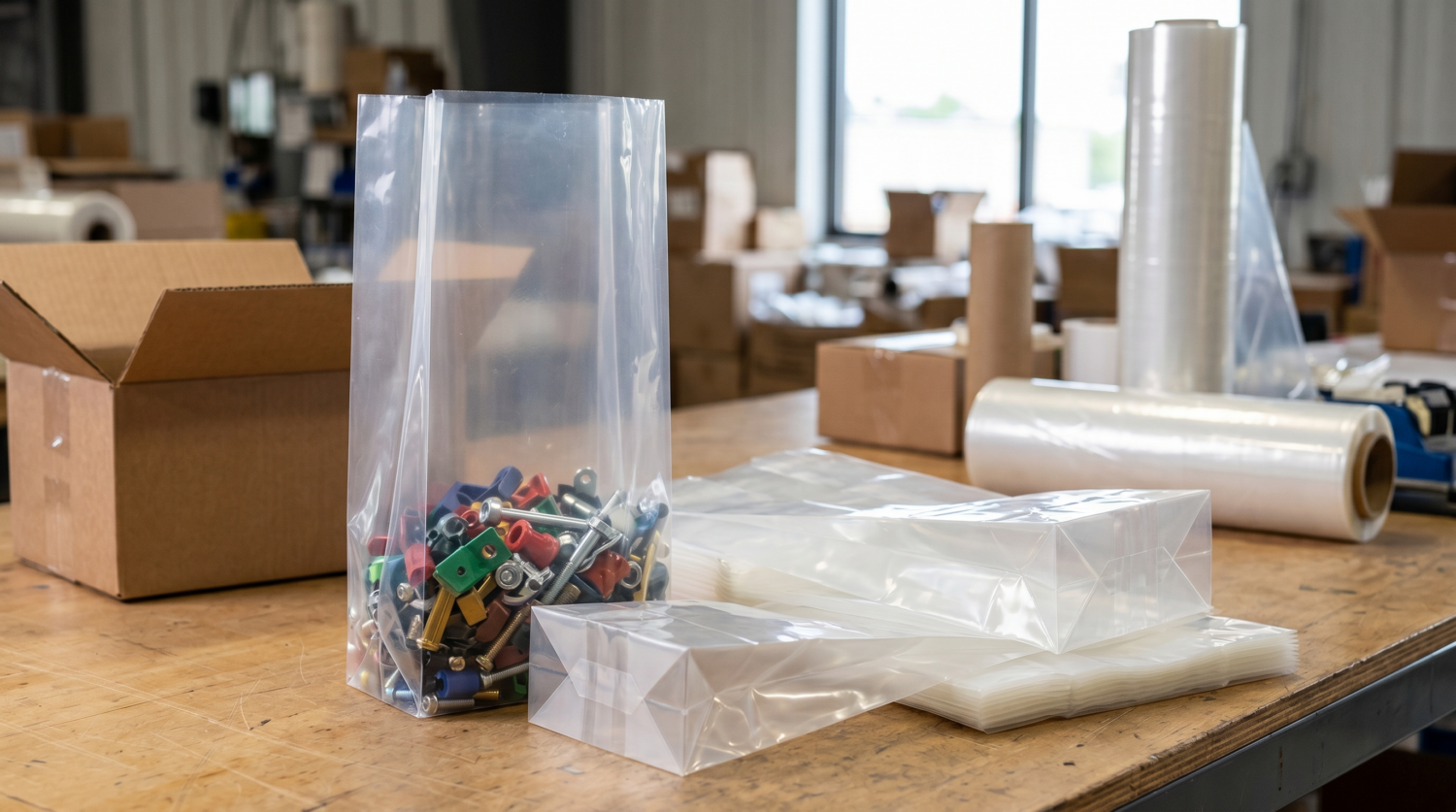
A gusseted poly bag features expandable side or bottom panels (called gussets) that unfold as the bag is filled. This added capacity allows the bag to accommodate larger, wider, or awkwardly shaped products while maintaining a secure fit.
Rather than forcing oversized products into an undersized bag, or using an unnecessarily large bag, a gusseted design strikes a better balance between product protection and material efficiency.
How They Work:
As products are inserted, the gussets expand to create additional internal volume. This allows the bag to conform more closely to the product’s dimensions while reducing excess empty space inside the package.
The result is a cleaner fit, improved product stability, and often less packaging waste.
Benefits:
- Greater storage capacity
- Better fit for bulky or irregular products
- Reduced excess material
- Improved load stability during shipping
- More efficient palletization and storage
Common Applications:
- Bulk food products
- Box liners
- Industrial components
- Medical supplies
- Distribution packaging
- Large assemblies
When Gusseted Bags Make Sense:
If your products have significant width, depth, or irregular dimensions, gusseted bags often provide a more secure and cost-effective packaging solution than flat bags.
When a Flat Bag Is Sufficient:
Flat poly bags remain an excellent choice for products with relatively uniform dimensions that don’t require additional expansion. Selecting the simplest design that adequately protects your product can help control packaging costs.
Wicketed Poly Bags for High-Speed Packaging Operations
For manufacturers running automated or semi-automated packaging equipment, packaging speed can directly impact production output. Every second saved during loading and sealing contributes to greater operational efficiency.
Wicketed poly bags are specifically engineered to support these high-volume environments.
What Are Wicketed Poly Bags?
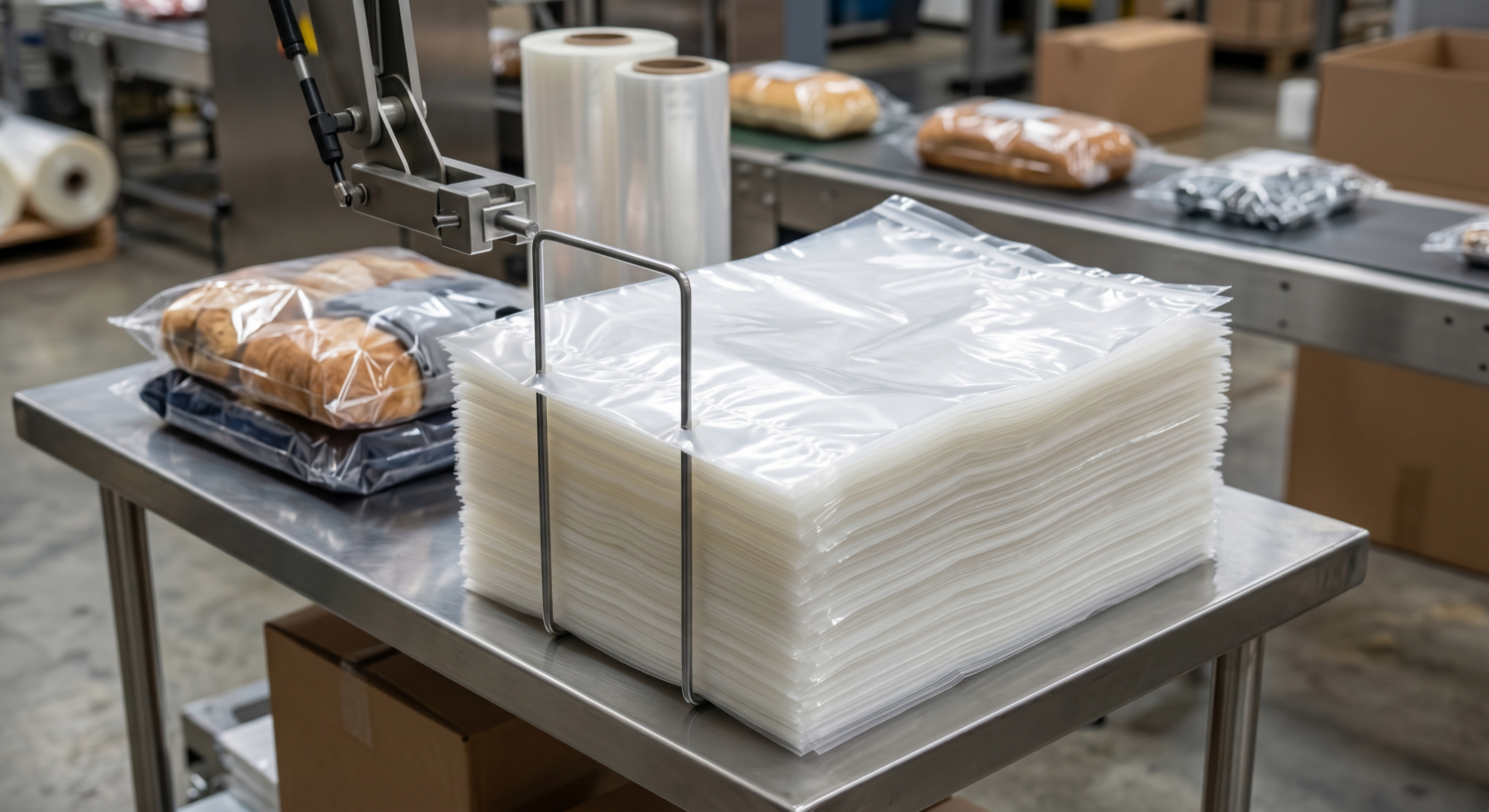
Wicketed poly bags are stacked on metal wicket wires that allow automated packaging equipment to quickly separate, open, fill, and seal individual bags.
Their consistent positioning and presentation reduce handling time while improving packaging accuracy and line efficiency.
Because they’re designed for automation, wicketed bags are commonly used in industries where packaging speed, consistency, and product presentation are critical.
How They Work
The bags remain secured on the wicket wire until they’re fed into the packaging machine. Air-assisted equipment or automated loaders open each bag, allowing products to be inserted quickly before sealing.
This streamlined process minimizes manual handling while supporting higher production rates.
Benefits:
- Faster packaging speeds
- Improved production efficiency
- Reduced labor requirements
- Consistent bag presentation
- Reliable dispensing for automated equipment
Common Applications:
- Bakery packaging
- Food processing
- Meat and poultry packaging
- Consumer goods
- Industrial parts
- Hardware packaging
Custom Features Available:
Depending on the application, wicketed bags can be manufactured with:
- FDA-compliant materials
- Vent holes
- Lip extensions
- Custom printing
- High-clarity film
- Various gauges and resin blends
When Wicketed Bags Are the Best Choice:
If your operation uses automated or semi-automated packaging equipment, wicketed bags can significantly improve throughput while maintaining consistent package quality.
When Manual Packaging Is More Common:
For lower-volume operations that package products entirely by hand, standard flat or gusseted bags may be more practical unless future automation is planned.
Industries That Commonly Use Specialty Poly Bags
Because packaging requirements vary widely between industries, specialty poly bags are used across numerous manufacturing and distribution environments.
Some of the industries that frequently rely on engineered packaging solutions include:
- Food processing and bakery manufacturing
- Electronics manufacturing
- Medical device manufacturing
- Automotive suppliers
- Aerospace manufacturers
- Industrial manufacturing
- Agriculture
- Construction materials
- Contract packaging
- Consumer products
Each industry has its own unique packaging challenges, making material selection, bag construction, and specialty features critical to overall packaging performance.
How to Choose the Right Specialty Poly Bag
Choosing the right specialty poly bag starts with understanding both your product and your packaging process. Rather than selecting a bag based solely on dimensions, manufacturers should evaluate how products will be stored, handled, transported, and packaged throughout their lifecycle.
Working through a few key questions can help narrow down the best solution.
Questions Buyers Should Ask:
What product are you protecting?
- Electronics
- Metal components
- Food products
- Industrial parts
- Outdoor materials
What environmental conditions will the product face?
- Static electricity
- Moisture
- UV exposure
- Corrosion
- Long-term storage
- Temperature fluctuations
How will the product be packaged?
- Manual packaging
- Automated packaging equipment
- Bulk storage
- Shipping and distribution
Specialty Bag Comparison Guide |
||
|---|---|---|
| Packaging Challenge | Recommended Specialty Bag | Why It Works |
| Static electricity | Anti-static poly bags | Dissipates static charges that can damage electronics |
| Outdoor UV exposure | UV-resistant poly bags | Resists degradation caused by prolonged sunlight |
| Rust and corrosion | VCI poly bags | Creates a protective environment around metal parts |
| Bulky or irregular products | Gusseted poly bags | Expands for greater capacity and improved fit |
| High-speed packaging | Wicketed poly bags | Supports automated filling and sealing operations |
It’s also important to remember that selecting the right bag goes beyond choosing the bag style. Resin selection, film gauge, sealing requirements, printing needs, FDA compliance, and storage conditions all influence the optimal packaging solution.
Custom Specialty Poly Bag Solutions from A-Pac Manufacturing
The best packaging solution isn’t always a standard stock bag.
Every application has different performance requirements, which is why A-Pac Manufacturing works closely with customers to engineer packaging solutions around their products—not the other way around.
Instead of recommending a one-size-fits-all bag, our team evaluates your product, production process, storage environment, automation equipment, and performance goals to determine the ideal combination of materials and construction.
Our capabilities include:
- Custom bag sizes and dimensions
- Multiple gauges and downgauging recommendations
- Specialty resin blends for enhanced performance
- Anti-static, UV-resistant, and VCI additives
- FDA-compliant materials for food applications
- Custom printing and branding
- Wicketed, gusseted, and custom bag constructions
- Technical guidance for industrial, medical, food, and manufacturing applications
Because we manufacture our products, we can tailor material selection to balance durability, cost efficiency, and performance. In many cases, selecting the appropriate resin blend allows customers to reduce film gauge without sacrificing strength—helping lower material costs while maintaining package integrity.
Our goal isn’t simply to sell poly bags. It’s to help customers build packaging solutions that improve operational efficiency, protect their products, and support long-term business performance.
Frequently Asked Questions
What’s the difference between standard and specialty poly bags?
Standard poly bags provide general-purpose protection, while specialty poly bags are engineered with additional materials or design features to solve specific packaging challenges such as static electricity, UV exposure, corrosion, automation, or oversized products.
Can specialty poly bags include multiple features?
Yes. Many custom bags combine multiple specialty features, such as FDA-compliant wicketed bags, UV-resistant gusseted bags, or anti-static bags with custom printing.
Are specialty poly bags recyclable?
Many specialty polyethylene bags can be recycled through appropriate polyethylene film recycling programs. Recyclability depends on the bag’s construction and local recycling capabilities.
Can specialty poly bags be custom printed?
Absolutely. Specialty poly bags can often be customized with logos, product information, handling instructions, barcodes, or branding while maintaining their specialized performance characteristics.
How do I know which specialty poly bag is right for my application?
The best solution depends on your product, storage environment, packaging equipment, regulatory requirements, and performance goals. Working with an experienced packaging manufacturer can help ensure you select the most effective and cost-efficient solution.
Invest in the Right Specialty Poly Bag for Your Application
The right packaging isn’t just about choosing a bag—it’s about engineering a solution that supports your products, processes, and long-term business goals.
If you’re evaluating specialty poly bags for your operation, A-Pac Manufacturing can help. Our team will work with you to identify the ideal material, gauge, additives, and bag construction based on your application, helping you improve performance while optimizing packaging costs.
Ready to find the right specialty poly bag for your application? Contact A-Pac Manufacturing today to speak with a packaging expert or request a custom quote.